Industry News · October 22, 2026 · AIPulse Team
Getting people to use AI turned out to be the easy part. The harder part is enterprise AI governance: knowing who uses which model, what it costs and what data leaves the building, without slowing anyone down.
Key takeaways
- Enterprise AI governance decides who can use which AI models, within what budget and with what data, and keeps a record of all of it.
- Banning AI tools or standardising on one model tends to push usage into shadow AI that nobody can see.
- An AI token management platform puts one front door in front of every model, so access, budgets, records and data checks run in one place.
What is enterprise AI governance?
Enterprise AI governance is the set of rules, controls and records that decide who can use which AI models, for what work, at what cost and with which data, and that let you prove it afterwards.
In practice it covers four things: access (who can call which models), cost (budgets, and who pays), data (what may go into a prompt) and evidence (a record of every request). Frameworks such as Singapore’s Model AI Governance Framework for Generative AI from IMDA and the AI Verify Foundation (2024) set out the principles. The hard part is applying them to every app and every team that already uses AI.
Every team that can call an AI model can also spend money, share data and break something. Most companies can see none of it.
Why has AI adoption outrun control?
Ask a finance director, a head of engineering and a security lead the same three questions about AI. Who is using which models? What did it cost last month, and why? What data went into those prompts? In most companies you’ll get three different answers, or none.
AI arrived through many doors at once. One team signed up for a model to write proposals. Engineering added two more for code. A contractor’s API key sits in a configuration file nobody remembers. Each choice made sense on the day. Together they add up to shadow AI: usage nobody designed and nobody can see.
So when the invoice jumps, nobody can say which team or app caused it. When a key leaks, nobody knows what breaks if it’s switched off. And when someone pastes a customer’s details into a prompt to get a faster answer, there’s no record that it happened.
We heard this again and again at Tech Week Singapore. In our booth survey, cost and usage visibility was the capability people wanted most (52%, n = 23), and 65% already use two or more AI models. Among the biggest spenders, governance came first.
Why banning AI or picking one model doesn’t work
The two instinctive fixes both backfire. Banning AI tools pushes usage onto personal accounts, where you see even less: shadow AI by another name. Standardising on one approved model feels safer, until that model gets slower, pricier or simply wrong for half the jobs. Then teams quietly sign up for their own accounts again, and you’re back where you started, with one more invoice.
What’s missing isn’t a policy. It’s a place where the policy can actually run.
How an AI token management platform closes the gap
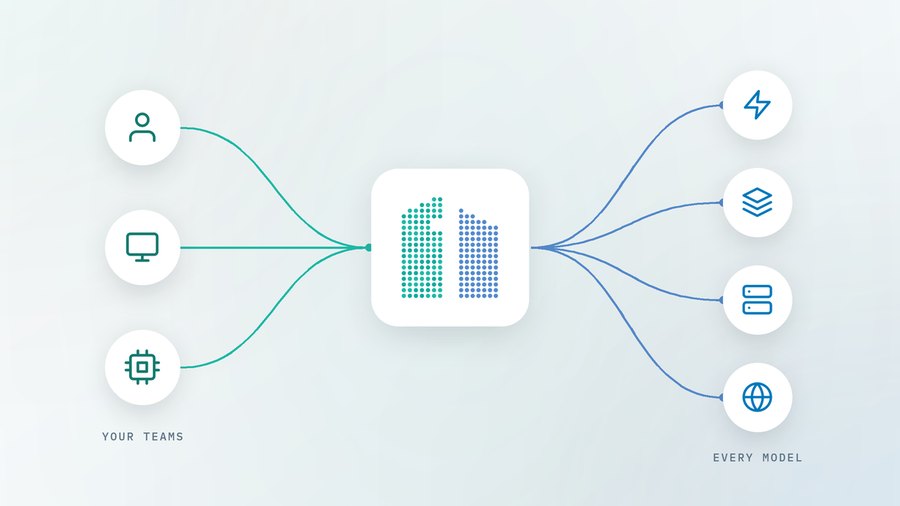
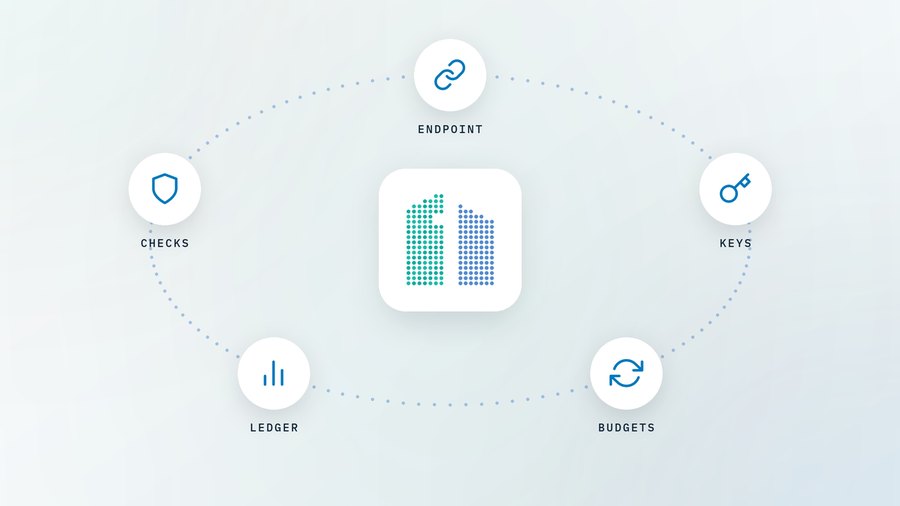
An AI token management platform sits between your people, apps and agents on one side and every model provider on the other. Every request passes through one front door, so the rules apply in one place instead of being rebuilt inside every app. In OneGateway, that comes down to five controls.
See the five controls in a live console: book a 20-minute demo with our team.
The five controls every enterprise AI governance setup needs
- One endpoint for every model. Apps call a single endpoint in the request format they already use. Behind it, you can connect several providers, including models you host yourself, and change them without touching application code.
- A key for every person and every app. Each key has its own list of allowed models, its own budget, an expiry date and, if you like, a list of approved IP addresses. If a key leaks, you switch off that one key, and nothing else.
- Budgets that reset on their own. Give members weekly or monthly spending quotas, a whole department at a time, with a heads-up at 80%. One stuck app hits its own cap, not the whole team’s.
- A ledger of usage and cost. Spend and usage broken down by department, member, model and provider, plus a trace of any single request: which model answered, how long it took, how many tokens it used and what it cost.
- Checks on what goes in and what comes out. Guardrails inspect the text of each request before it reaches the model, and each answer before it comes back. They can redact personal data, block a request, catch prompt-injection attempts and log every match.
A 30-day plan to regain control of AI use
None of this needs a big programme. A sensible first month looks something like this.
Week 1. Move provider keys into the gateway and point one or two apps at the new endpoint. For most apps that means a new API URL and key; the rest of the code stays as it is. The Quickstart walks through the first call.
Week 2. Give each department a quota and switch on the 80% heads-up.
Week 3. Send finance its first report of spend by team and by model. For many companies, it’s the first one they’ve ever had.
Week 4. Turn on a guardrail in observe mode and see what it would have caught, before deciding what to enforce.
Not one team has to stop what it’s doing along the way.
Staying in control as AI use grows
A year ago, the hard part was getting people to use AI at all. Now it’s staying in control as usage grows: knowing who used what, keeping data where it belongs, and paying only for what you meant to. That’s the job of enterprise AI governance, and of an AI token management platform. It’s why we built OneGateway.
Want to see where your company’s AI spend and data go today? Book a 20-minute demo, or start free and point one app at OneGateway.
Frequently asked questions
What is enterprise AI governance?
It is the rules, controls and records that decide who can use which AI models, for what, at what cost and with which data. Good governance applies those rules to every request automatically, and keeps the evidence finance, security and auditors ask for.
What is shadow AI?
Shadow AI is AI use the company hasn’t approved or can’t see, such as personal accounts or API keys left in code. It usually grows when the official options are slow or limited, which is why giving people a governed route works better than a ban.
What is an AI token management platform?
It is the layer between your users, apps and agents and the AI models they call. It controls who can use which models, sets budgets, records usage and cost, and checks what goes in and out.
Do we have to change our applications?
Usually very little. Apps that already use a supported request format, such as OpenAI’s or Anthropic’s, normally need only a new API URL, a OneGateway key and a model ID.
Can our AI traffic stay inside our own network?
Yes, with a hybrid deployment. A dedicated Token Gate runs inside your network. When it calls internal models, request and response content can stay there, and only management data such as configuration, quotas and usage syncs with the console. Any external service you enable still receives the text it processes.